Southeast Asia is one of the world’s major centers of tropical biodiversity. It is home to the largest island forests — New Guinea, Borneo, and Sumatra — which together rank third in size after the Amazon and Congo. It is noteworthy that more than half of all animal and plant species in the region are endemic — unique to this place.
Ecosystem features
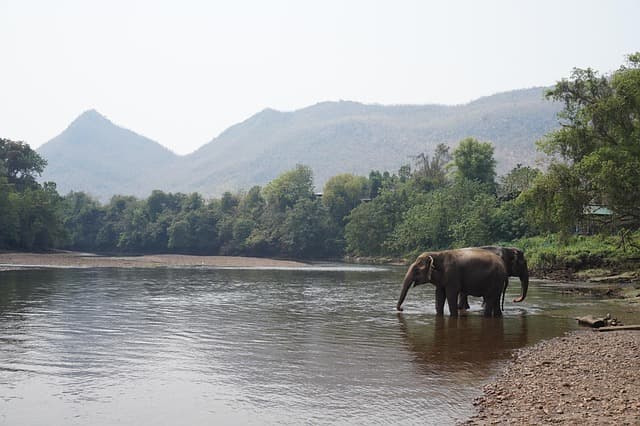
- Tropical forests are home to ancient oak and dipterocarp species, creating a dense three-tiered canopy. This is where orangutans, Siamese tigers, and Asian elephants live.
- Mangrove forests and corals, especially in the so-called Coral Triangle, cover up to 30% of all mangroves in the world: they are home to 76% of coral species and more than 3,000 species of fish. Iconic species and their status.
- The Sumatran orangutan, tiger, and rhinoceros are critically endangered.
- The Malayan tapir, or Asian tapir, is the only tapir species (Tapirus indicus) outside of America, with all the risks of extinction (fewer than 2,500 adult individuals).
- The Sunda colugo is a nocturnal tree-dwelling mammal that depends on intact tropical forests.
- Rafflesia, the world’s largest flower, is critically endangered — some species live for only 5–7 days.
Biodiversity and the latest discoveries
The region is home to six of the 25 “biodiversity hotspots.” Since 1997, scientists have described more than 2,200 new species — every year, the Mekong River brings hundreds of new discoveries.
Threats to the ecosystem
- Deforestation — up to 14.5% of the territory has been lost in the last 15 years; some regions are at risk of losing up to 98% of their forests in the coming years.
- Agriculture — the expansion of oil palm, rubber, and paper monoculture plantations is leading to forest fragmentation.
- Illegal hunting — poaching for meat and the exotic animal trade, especially of tapirs, pangolins, and bears, is becoming increasingly destructive.
- Climate change — active deforestation releases up to 400 million tons of CO₂ per year and accelerates desertification and climate change.
Public and scientific initiatives
- ASAP! (Asian Species Action Partnership) coordinates efforts to protect critically endangered species such as the Sumatran rhino, Siamese crocodile, orangutan, and others.
- Rainforest Trust and WCS are creating large protected areas (following the example of the Serengeti South East and areas in Myanmar) covering tens of thousands of hectares.
- In Cambodia, the Siamese crocodile population has survived thanks to captive breeding programs, with more than 1,000 reptiles returned to the wild.
Prospects: between loss and hope
Southeast Asia is the epicenter of biological diversity and, at the same time, one of the regions most affected by human activity. Protecting the ecosystem requires coordinated efforts: creating nature reserves, sustainable use of resources, limiting poaching, and environmental education.
Preserving Southeast Asia is a fight for the global climate, biodiversity, and the rights of local communities. Support for local initiatives, sustainable tourism, and international projects can make this region a stronghold of life, not a field of destruction.