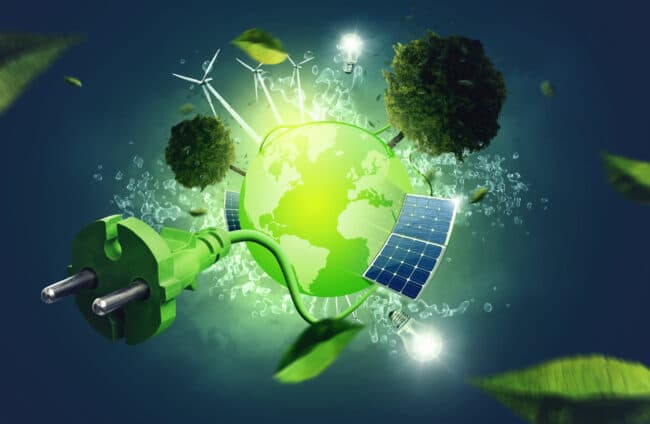
Global interest in green technologies is experiencing significant growth. In 2024, global investments in “green” fields—including electromobility, renewable energy, and smart grids—reached record levels, surpassing two trillion dollars. China has established itself as the absolute leader, while the United States has maintained its position but at a more moderate pace. The International Energy Agency predicts that in 2025, investments in clean energy will grow even faster, leaving traditional hydrocarbons far behind.
China continues to strengthen its leadership. The country is building the world’s largest solar and wind farms, and the scale of investments is impressive. The installed capacity of renewable energy increases year by year, and by 2030, Beijing aims to reach a level that can power millions of households.
The United States, on the other hand, is going through a contrasting phase. Some political decisions have led to a reduction in renewable energy projects. Nevertheless, several states and cities are actively implementing green technologies, and private companies continue to invest in a sustainable future, despite federal restrictions.
Europe and the EU: A Platform for Transition
The European Union demonstrates a systematic approach to ecological transformation. The “Green Deal” has become a central strategy aiming to achieve climate neutrality by the middle of the century. Every year, Europe plans to invest hundreds of billions of euros to support the transition, stimulate the development of green technologies, and modernize the energy system.
A set of tools is used to attract capital. The InvestEU program mobilizes up to one trillion euros for ecological projects. Special attention is given to regions dominated by the coal industry to help them fairly navigate the transition process. The Global Gateway external initiative aims to export sustainable technologies to other parts of the world, providing Europe with not only an economic advantage but also a strategic one.
Czech Republic: A Clean Path to the Future
As a member of the European Union, the Czech Republic is charting its own course toward ecological transformation. The country is implementing support programs for the production of batteries, solar panels, wind turbines, and carbon capture systems. Significant funds are allocated to biomass projects, enabling businesses to switch to renewable energy and reduce their carbon footprint.
Particular attention is paid to the development of green hydrogen, which is seen as a key solution for reducing emissions in industry, transport, and the energy system. At the same time, the Czech Republic is focusing on nuclear energy: the construction of new reactors is planned to ensure the country’s energy independence and allow for the complete phase-out of coal by 2033.
Czech companies are actively participating in this process. Public subsidies and European funds support the introduction of low-carbon technologies, stimulate innovation, and open up opportunities for the development of eco-friendly productions.
Integrating Leisure into the Green Agenda
Despite the seriousness of the ecological issue, people’s daily lives remain linked to the need for relaxation. Online entertainment, including gaming platforms, remains popular among Europeans. This contrast is interesting: while major powers are investing trillions into ecosystem preservation, users continue to seek leisure in the digital space. Online casinos illustrate the constant interest in virtual entertainment. In this context, the modern resource novecasino.net can be mentioned, offering new formats of online entertainment that reflect the adaptation of digital industries to the demands of our time.
Conclusion: A Balance Between Ambitions and Realities
Today, major powers show serious commitment to green technologies. China is rapidly developing its renewable energy capabilities, Europe is funding large-scale initiatives to achieve climate neutrality, and the Czech Republic is combining the development of renewable and nuclear energy sources.
The key to success lies in the ability to find a balance between ambitions and realities. Ecology is not just a matter of investments and technologies; it is also a matter of daily culture, reflecting societal values. Even in the realm of leisure, where people seek rest and new experiences, evolutions and trends are emerging. This confirms that the green transition is a process that touches all spheres of life, and the future largely depends on our ability to unite economy, technology, and lifestyle into a single sustainable system.