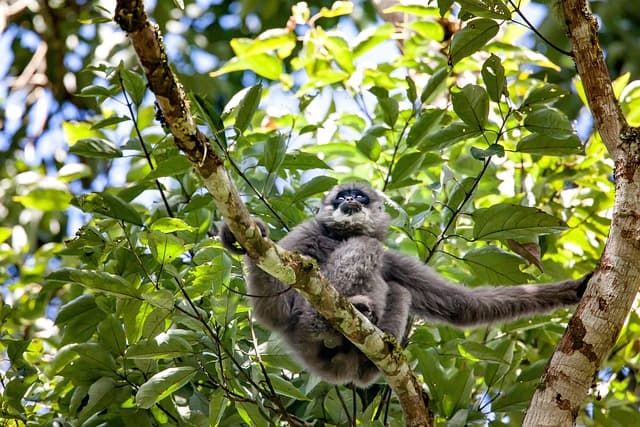
The Mekong River basin is home to several species of gibbons — small tree-dwelling primates of the Hylobatidae family, such as the southern yellow-cheeked gibbon (Nomascus gabriellae), forest gibbons (Hylobates spp.), and black-capped gibbons (Nomascus concolor), which are found throughout eastern Laos, Cambodia, Vietnam, and southern China, where the Mekong sometimes serves as their distribution boundary.
Why do they cry out?
Gibbons are masters of communication. They emit loud calls at dawn, lasting up to 12 minutes and audible from up to a kilometer away — singles, male-female duets, and family songs help mark territory, strengthen pairs, and keep the group together.
How do they live?
Social structure: pairs with offspring, family size — 3 to 6 individuals. Males tend to stay closer to their native nests, while females migrate further away.
- Movement: they move by clinging to branches with their hooked hands and swinging their arms widely (brachiation), which makes them graceful acrobats of the forest canopy.
- Diet: up to 80% of their diet consists of fruit (especially figs, 38%), with the rest being leaves, flowers, and small fauna.
Global threats
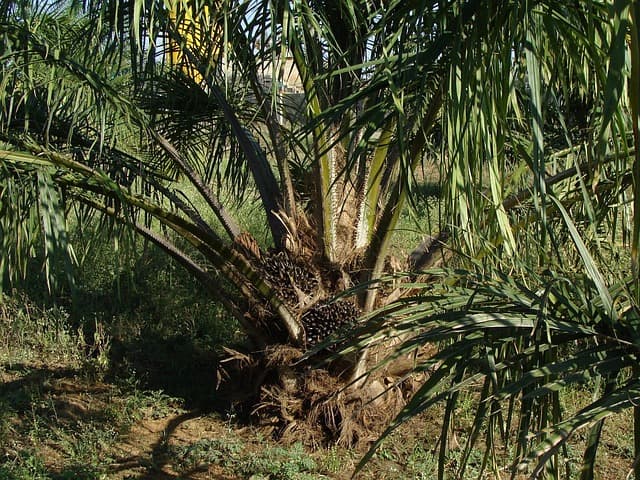
- Deforestation for agriculture and plantations fragments their habitat and impairs their movement.
- Poaching and illegal trade in gibbons as exotic pets is a serious problem, especially in Thailand, Cambodia, and Vietnam.
- Population fragmentation requires the relocation of animals and the preservation of ecological corridors.
Hymn of hope
The voice of the gibbon is a symbol of fragile beauty. Their morning songs remind us of the biodiversity and unity of the Mekong ecosystem. Preserving this music means not only saving primates, but also protecting forests, the climate, and cultural traditions. Only by working together—governments, NGOs, and society—can we restore the forest’s silence, filled with the morning symphony of gibbons.