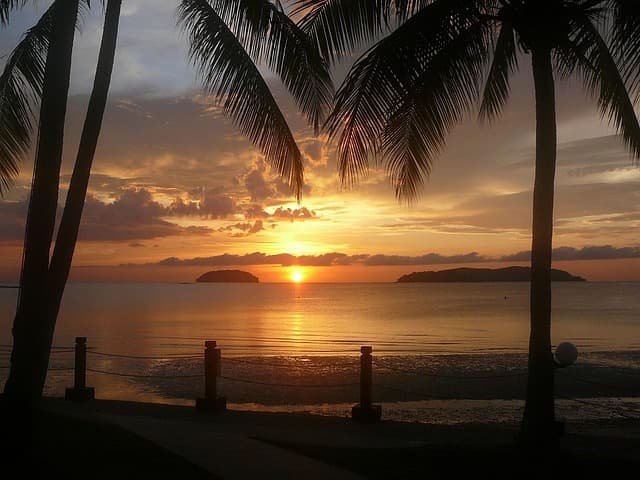
It turns out that there are still places that can safely be called paradise on Earth. And that place is Borneo.
Features of the island
- Third largest in the world;
- Covers 800,000 square kilometers;
- Belongs to three countries (Malaysia, Brunei, and Indonesia);
- Covered with the most ancient rainforests, which are over 130 million years old;
- Home to the world’s only rehabilitation center for orangutans and proboscis monkeys.
Borneo became famous at the turn of the 15th and 16th centuries, or more precisely in 1521, when it appeared on the geographical map. It was Ferdinand Magellan who, upon returning from his expedition, noted that he had found paradise on Earth. It is dominated by tropical forests and mountain ranges, with the peak of Kinabalu at 4,095 meters.
The two parts of the island are two separate territories
Malaysian territory
It includes two states in the north, covered with dense tropical forests and mountainous terrain.
- Sarawak – “Land of the Hornbill”;
- Sabah – “Land Below the Wind”.
This part of the island attracts visitors with:
- temple complexes and mosques – the main shrines – museums, which contain centuries of history, dating back to the reign of kings – museums, which contain centuries of history, from the reign of kings – museums, which contain centuries of history, dating back to the reign of kings – museums, which contain centuries of history, dating back to the reign of kings – museums, which contain centuries of history, dating back to the reign of kings;
- museums, which house centuries of history, dating back to the reign of kings;
- the Mulu and Bako nature reserves. Hidden under the canopy of the jungle are caves, one of which was found to contain an ancient human settlement dating back 40,000 years, and nurseries that have become home to orangutans;
- Kinabalu National Park, which covers almost 800 hectares, where the main attraction is the mountain of the same name and unique flora and fauna;
- Snow-white beaches and azure sea.
The Indonesian part of the island
This part of the island is called “Kalimantan,” which means “island of scorching weather.”
South Kalimantan
This part of the island is the cradle of rivers, literally crisscrossed by a network of waterways that are so essential to this area. The rivers feed waterfalls flowing down from the mountains. Therefore, a system of water transportation has been established here, as well as an abundance of floating markets.
West Kalimantan
It is located exactly on the equator, right at the intersection of the Earth’s axis. There is a monument here, next to which you can observe unique phenomena. These phenomena are as follows: if you pour water into a paper funnel just north of the monument, the water flow will swirl clockwise. If you move south, the water will swirl counterclockwise.
Central Kalimantan (Borneo)
All that is pristine is hidden far from human eyes. And getting here is very difficult. It requires a complicated journey. For those who take the risk, the reward will be the opportunity to see pristine nature. Not only that, but it will also be possible to establish direct contact with the rare inhabitants of this part of the island.
Following the laid trails, you can get to the most protected places and make a stop here. In some places, you can even spend the night. Everything you need for this is provided.
Where do the trails of central Borneo lead?
- Trails laid along the picturesque banks of the Sungai River. They wind through virgin thickets and go high into the mountains.
- “Hanjung Harapan” – orangutan rehabilitation center
Here, the youngest monkeys, orphaned in the wild, have found refuge. You can observe them from a distance.
- ” Pondok Tangguwi” – Rehabilitation Center Park
“Liki Camp”
This camp, founded in 1971, is home to individuals who have suffered at the hands of poachers, animal abusers, and traders.
Here, the monkeys are in their natural habitat. Their behavior can be observed from a distance.
Labuk Bay – a camp for proboscis monkeys
This is the only place on our planet where you can meet a unique species of primates listed in the Red Book, which live in mangrove forests and peat bogs. They are called proboscis monkeys. They got their name because of their funny appearance, or rather their long, drooping nose, which looks like a sausage. They are incredibly funny. And the little babies are just adorable.
The threat of extinction of equatorial forests
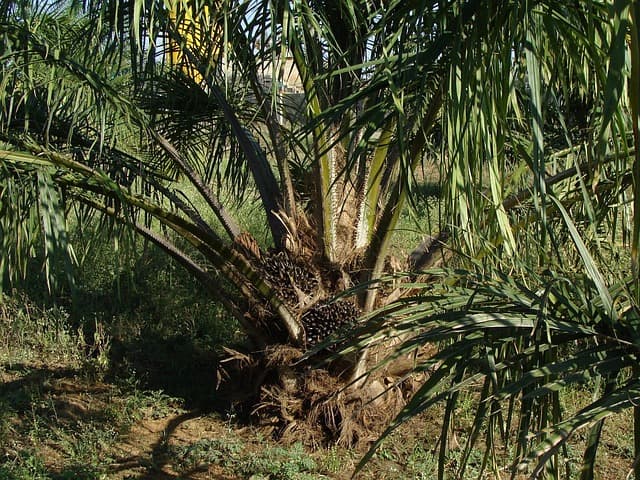
Borneo, with all its inhabitants, may one day disappear from the face of the Earth. And all this is due to the deforestation of rainforests, which are the habitat not only of proboscis monkeys and orangutans, but also of other animals and plants. Equatorial forests are being replaced by oil palm plantations. It’s a business, and no one cares about the animal world.
Today, the orangutan population has declined by almost 50%, and there are only 3,000 proboscis monkeys left. The Sumatran pygmy rhinoceros—all in one.